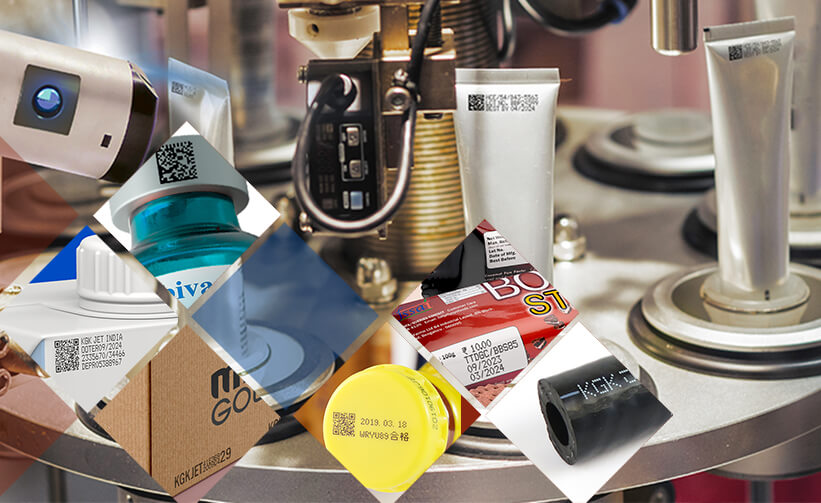
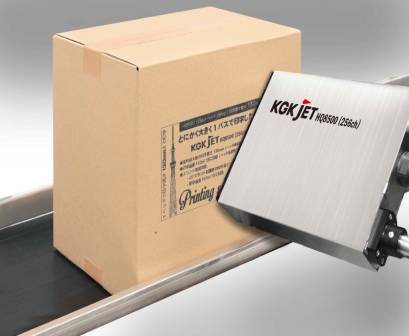
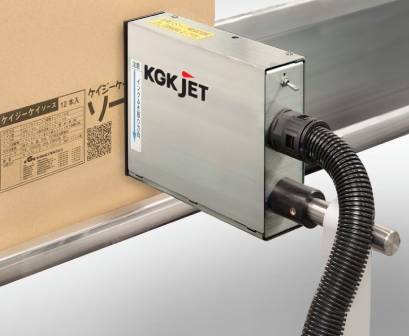
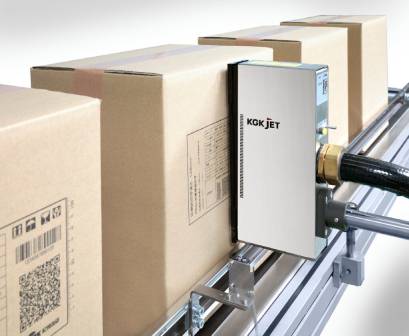
Revolutionizing Multi-Lane Production The Ultimate Guide to X-Y Traversing Systems with Continuous Inkjet printer CIJ
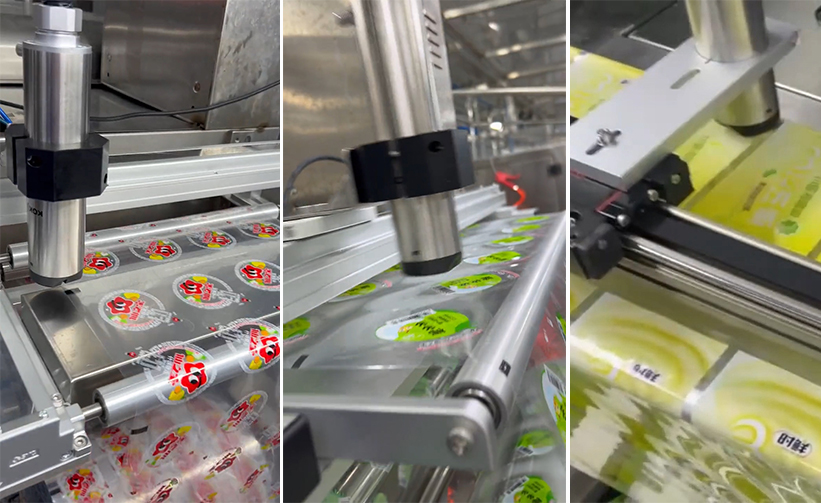
In the fast-paced world of modern manufacturing, operational
efficiency and cost control dictate your bottom line. When managing high-volume
production lines that utilize multi-lane thermoforming, horizontal
form-fill-seal (HFFS), or vertical form-fill-seal (VFFS) machinery, a recurring
manufacturing challenge presents itself: How do you accurately print
variable, high-quality trace codes on multiple rows of products simultaneously
without exploding your capital expenditure?
Historically, production managers believed the only solution
was to mount an individual printer over every single product lane. On an
eight-lane production line, that meant installing, maintaining, and supplying
eight separate industrial printers.
Today, advanced automation offers a far smarter, more
elegant solution: integrating a high-performance continuous inkjet printer into
a precision traversing system. By moving a single CIJ printhead fluidly along
an X-Y axis, manufacturers can print sharp, compliant codes across multiple
lanes of a moving web with absolute precision.
This comprehensive guide breaks down how a traversing system
using continuous inkjet technology works, explores the real-world manufacturing
economics behind it, analyzes the core benefits, solves common technical
challenges, and establishes which industries stand to gain the most from this
game-changing integration.
What is an X-Y Traversing System with CIJ Integration?
At its core, an X-Y traversing system is a
servo-controlled, motorized mechanical rail assembly engineered to manipulate a
printing instrument across a stationary or indexing substrate.
When you integrate a continuous inkjet printer, the
light, compact CIJ printhead is mounted directly onto the carriage of the
traverse system. Instead of the product moving underneath a fixed printer, the
printer head dynamically glides perpendicular (or parallel) to the flow of the
substrate—typically during the "dwell" phase of the packaging cycle.
The Anatomy of the Motion
The system can operate in multiple configurations depending
on the layout of your production line:
- Across-the-Web
Printing: The printhead moves from left to right along the X-axis,
coding a complete row of products across multiple lanes before resetting
to its home position as the web advances.
- Parallel-to-Film
Flow: The system moves in synchronization with the film, allowing
long-form messages or longitudinal codes to be applied cleanly down the
lane.
- True
X-Y Matrix Manipulation: For advanced, multi-row matrix arrays (such
as blister packs or multi-pack jelly cups), the dual-axis movement
coordinates exact coordinate targeting, applying high-quality data codes,
batch numbers, or complex barcodes on every single package across a vast
surface area.
The Strategic Balance: Continuous inkjet printer vs.
Capital Investment
When auditing manufacturing overhead, procurement teams
often closely track the upfront Continuous inkjet printer price alongside the
total cost of ownership (TCO). Evaluating a single-printer setup versus a
multi-printer setup highlights the immense financial advantage of a traversing
system:
|
Factor |
Multi-Printer Setup (e.g., 6 Lanes) |
Single CIJ + Traversing System Setup |
|
Initial Capital Expenditure (CapEx) |
Multiplied by 6 (High initial continuous inkjet printer price
burden) |
Cost of 1 CIJ Printer + 1 Traversing Rail Assembly
(Massive upfront savings) |
|
Consumable Waste |
6 times the fluid consumption; higher evaporation rate
during startup/shutdown cycles |
Optimized fluid utilization; single-source ink and solvent
reservoir management |
|
Preventative Maintenance |
6 times the wear-and-tear; 6 filters, pumps, and nozzles
requiring technical attention |
Only 1 printhead and mechanical rail to maintain |
|
Line Footprint & Spatial Logistics |
Bulky, crowded mounting brackets; complex cable routing
over the packaging web |
Compact, streamlined integration that preserves valuable
production floor space |
While a premium, automated automatic batch printing machine
for packaging lines carries an initial investment, deploying it via a traverse
mechanism cuts your printer hardware acquisition costs by up to 70–80% on
multi-lane configurations.
Core Technical Benefits of CIJ Traversing Systems
1. Exceptional Cost-Effectiveness
As highlighted by the financial comparison, the primary
driver for integrating a traverse system is the substantial reduction in
capital equipment costs. By utilizing just one printhead to service four, six,
or eight product lanes, you consolidate your hardware footprint. Furthermore,
down-the-line operational costs—such as replacement parts, technical training,
and software licensing—are tied to a single asset rather than an entire fleet
of industrial printers.
2. High-Speed Precision and Coding Density
A common concern among engineers is whether a traversing
setup sacrifices speed or quality when generating complex data. Advanced
continuous inkjet technology completely eliminates this concern.
A high-performance CIJ machine can print up to six lines of
text, or dense variable data such as high-contrast Datamatrix codes, barcodes,
and QR codes, without affecting its raw printing speed. Unlike other printing
technologies that slow down mechanically when rendering complex graphics, a CIJ
printer maintains a relentless, non-impact firing rate. The servo-driven
traversing arm matches this agility, executing high-speed sweeps across the web
while leaving crisp, razor-sharp marks.
3. Precision Encoder Synchronization
The greatest enemy of primary product packaging text is smudging.
If the movement of the printing mechanism is even a fraction of a millisecond
out of sync with the underlying packaging film, codes become illegible,
resulting in rejections.
To solve this, the traversing system links directly with the
primary packaging machine's master encoder (whether an HFFS or VFFS system).
This continuous digital feedback loop ensures that the traversing sweep speed
perfectly matches the film movement or index rate. If the production line slows
down or speeds up, the traversing system adjust print cycle automatically its
drop placement in real-time, completely eliminating text stretching,
compression, or smudging.
4. Non-Contact Versatility across Varied Substrates
Flexible films, uneven plastics, or slightly curved surfaces
present significant challenges for mechanical-contact printers like Thermal
Transfer Overprinters (TTO). Because continuous inkjet is a completely non-contact
technology, ink droplets travel across a small air gap from the nozzle to the
package at the distance of 10 to 15mm. This enables flawless printing on
flexible packaging, thermoformed pockets, or irregular textures without
damaging the delicate product substrate or tearing thin films.
Who Can Benefit? Key Industrial Applications
The versatility of an X-Y traversing system makes it a vital
asset across diverse industrial lines, spanning both flexible food packaging
and heavy industrial manufacturing.
Food Production Environments (Dairy, Eggs, Bakery,
Confectionery)
In hygiene-critical sectors like food manufacturing,
maximizing throughput while minimizing manual handling is crucial for both
profitability and food safety compliance.
- Dairy
Packaging: Form-fill-seal machines producing multi-packs of yogurt,
butter tubs, or processed cheese rely on traversing setups to quickly
apply date codes and batch numbers across rows of thermoformed cups before
they are die-cut.
- Bakery
& Confectionery: High-speed multi-lane lane arrays carrying rows
of snack cakes, chocolates, or portion-packed jellies benefit from the
system's ability to seamlessly code every lane without requiring a cluster
of separate printheads.
- Egg
Grading & Packing: Multiple lanes of egg cartons or trays can be
tracked and print with batch code and expiry date in real-time.
Heavy Industrial Extrusion Lines (Pipes & Profiles)
Outside the food sector, the combination of traversing
systems and high-speed CIJ technology forms the operational backbone of the pipe
manufacturing sector.
[Extrusion Head] ---> [Cooling Tank] ---> [X-Y
Traversing CIJ Printer] ---> [Coiler / Cutter]
(Prints across multiple extruded PVC lines)
PVC & UPVC Pipe Production: In high-volume
facilities, a single extrusion line often outputs multiple parallel streams of
conduits simultaneously. An extrusion line inkjet printer mounted to a
heavy-duty traverse system glides smoothly across the lines, ensuring every
pipe receives a clear, compliant mark.
Common Technical Challenges & Engineering Solutions
While an X-Y traversing CIJ system offers immense
advantages, integrating two separate automated systems requires careful
engineering. Below are the most common field challenges faced by plant
managers, alongside their proven technical solutions.
Challenge 1: Cable Fatigue and Umbilical Wear
Because the printhead moves back and forth thousands of
times a day, the conduit housing the ink lines, solvent lines, and electrical
cables (the umbilical) undergoes constant bending stress. Over time, this
mechanical fatigue can lead to micro-fractures in internal lines or wiring.
The Solution: Utilize a premium industrial-grade
cable track system (often called an Drag Chain Cable Carrier). The traverse
assembly must be configured with a generous bend radius that prevents tight
pinching, ensuring the umbilical is smoothly supported across its entire range
of motion to maximize operational lifespan.
Challenge 2: Ink Drying and Nozzle Clogging During Dwell
Downtime
Challenge
2: Ink Drying and Nozzle Clogging During Downtime
In standard
CIJ printers, printheads often require frequent cleaning because ink dries
inside the nozzle or contaminated ink causes clogs, splattering, and faint
text. To perform this cleaning, the printhead must be dismounted from the
carriage.
The
Solution
When your CIJ
printer pauses, KGK Jet’s innovative Nozzle Capping System automatically seals
the nozzle with the gutter, preventing the ink from drying. Any recovered ink
flows back into the main tank for reuse—saving you both ink and money. As soon
as production resumes, the system reopens seamlessly for immediate, continuous
printing. The result? Minimal cleaning and maximum uptime for operators.
Challenge 3: Lateral Speed Variation and Coding Alignment
As a traversing carriage accelerates from a dead stop, hits
its peak travel speed, and decelerates at the opposite rail end, the physical
speed of the printhead changes along the axis. If left uncorrected, text
printed during the acceleration or deceleration phases would appear stretched or warped.
The Solution: Advance traverse systems utilize
high-precision servo drives to meticulously manage printhead acceleration and
deceleration, effectively eliminating mechanical judder. By dynamically
regulating velocity and torque, these drives ensure seamless transitions during
starts and stops. This level of control eliminates ink-spitting, text
stretching, and character distortion, guaranteeing crisp, consistent print
quality even at peak production speeds.
Challenge 4: Harsh Environment Interferences (Dust,
Moisture, Washdowns)
Food production facilities (especially dairy, meat, and
poultry) require rigorous washdown procedures using chemical sanitizers and
high-pressure water. Similarly, extrusion lines can be subject to extreme heat,
moisture, and dust.
The Solution: Specify a traverse rail assembly
manufactured from high-grade stainless steel with an IP65 or IP66 rating. The
CIJ printhead should incorporate a positive air pressure system, which feeds
clean, pressurized air into the printhead casing. This creates an outward
airflow that completely prevents airborne dust, humidity, or moisture from
entering the nozzle assembly.
How to Select the Best Industrial Marking and Coding
Systems for Your Facility
Investing in a Continuous inkjet printer package requires
evaluating your long-term operating costs and line constraints. To find the
optimal configuration for your plant, use this engineering checklist:
- Determine
Your Spatial Constraints: Does your current packaging machinery line
have adequate overhead space for a linear rail? Look for a CIJ printer
with a remarkably small footprint and a compact printhead design that can
tuck neatly into tight machine frames.
- Evaluate
Your Total Line Width: Measure the maximum width of your web film or
track. Ensure the traversing rail length offers enough overtravel at the
margins so the printhead can accelerate to a stable speed before reaching
the first product lane.
- Analyze
Your Coding Density Requirements: Do you need simple 1-line expiry
dates, or do your retailers require tracking via 2D Datamatrix and dynamic
QR codes? Opt for a continuous inkjet printer that handles sharp coding without
compromising line speed.
- Confirm
Communication Protocols: Ensure the system controller easily
interfaces with your existing PLCs and line encoders via standard
protocols like Ethernet/IP, Modbus, or basic digital I/O signals.
Conclusion: Driving Manufacturing Efficiency Forward
In today's competitive industrial landscape, sticking with
legacy, single-lane fixed printing setups on multi-lane lines introduces
unnecessary overhead, capital drain, and maintenance complexity.
Integrating an X-Y traversing system with a high-performance
continuous inkjet printer represents the ideal balance of advanced automation
and strict fiscal responsibility. By cutting hardware acquisition costs,
slashing consumable waste, and providing the unparalleled flexibility to print
up to six lines of text or complex QR codes on virtually any substrate, this
unified approach stands out as one of the best industrial marking and coding systems for modern, high-throughput manufacturing plants.
Whether you run a fast-paced dairy packaging line or a
rugged multi-strand extrusion plant, adopting an automated traversing CIJ
solution ensures your facility maintains absolute tracking compliance,
optimized throughput, and an exceptionally lean bottom line.
Are you ready to audit your multi-lane packaging or
extrusion setup to see how much a custom traversing system can save your
facility? Contact our application engineers today for a custom line analysis
and live demonstration
WhatsApp | Call | Email
+91 78239 70575 | 98403 42033 | marketing@kgkjetindia.com
Watch the Video on YouTube:
One Printhead, Multiple Lanes: Smart Coding with KGK Jet
https://youtu.be/EmEzVW2rWcE
Subscribe to our newsletter and receive a selection of cool articles every weeks
The Latest
Revolutionize Your Production: High-Precision Coding on Flexible Flat Cables with the KGK Jet JPT2900
16 March 2026

 2 minute read
Tough Environments Strong Codes KGK Jet CIJ and Laser Printers for Agrochemical Packaging
13 October 2025
2 minute read